An IVF journey is not a list of separate procedures but one coherent plan. This page explains, step by step, how the medical team builds your treatment, which techniques are used at which moment, and how every choice contributes to the ultimate goal: a healthy pregnancy.
It starts with your file, not with a menu
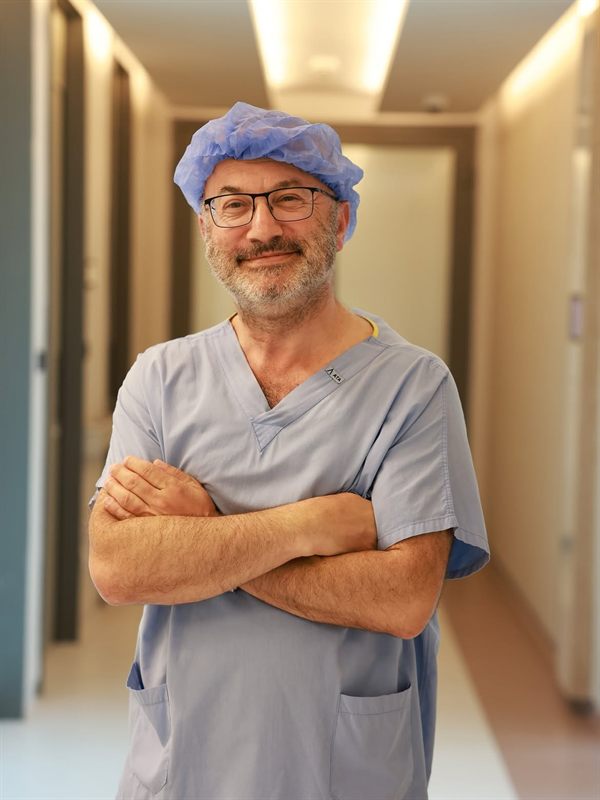
Prof. dr. Cem Demirel
Good treatment does not start with a technique, but with a diagnosis. Before you take a single medicine, the medical team in Istanbul studies your complete file: previous treatments and their outcomes, hormone levels, semen analysis, age and the medical history of both of you.
Based on that, prof. dr. Demirel draws up a personal treatment plan, including a medication prescription. You never have to choose techniques yourself — the team decides what fits your situation at every step, and explains why. If you wish, you simply start hormone stimulation at home.
Tailored stimulation: more mature eggs, better chances
In a natural cycle, one egg matures. With hormone stimulation we let several follicles mature at once — because the more mature eggs there are, the greater the chance of good-quality embryos.
Dosage is precision work. That is why you are monitored with an ultrasound roughly every two to three days during the stimulation phase, and the schedule is adjusted where needed. Once the follicles reach the right size, you receive the dual trigger injection. The egg retrieval takes place exactly 36 hours later — the moment the eggs are optimally mature.
The sperm: first understand, then select
On the day of the retrieval, the sperm is analysed as well. The result determines the next step. If no sperm cells are found in the semen (azoospermia), that does not mean the end of the journey: through MESA, PESA, TESE or Micro-TESE, sperm cells can often be retrieved directly from the epididymis or testis.
If sperm cells are present but quality is a concern, the embryologist chooses a fitting selection method. If DNA quality plays a role, the Sperm Chip can be used: a microchip that mimics the natural selection route in the body, so only the fittest sperm cells make it through. And the SpermSlow technique recognises mature sperm cells by their natural binding to hyaluronic acid — the same principle found around the egg itself.
Which method is used is decided by the doctor and embryologist based on the semen analysis. Every choice serves the same goal: bringing the best possible sperm cell to the best possible egg.
Fertilisation: careful, and as gentle as possible
Fertilisation happens in the laboratory through ICSI: the embryologist places one selected sperm cell directly into the egg, so fertilisation is not left to chance.
If fertilisation remained unexplainably low in previous attempts, artificial oocyte activation (AOA) can be added: a calcium ionophore starts the signalling cascade that normally sets fertilisation in motion. With us, AOA is used at no extra cost whenever it is medically meaningful.
Five days in the lab: monitoring without disturbing
After fertilisation, the embryos develop in the EmbryoScope: an advanced incubator that continuously records their growth with time-lapse photography. In a classic laboratory, embryos are briefly taken out of the incubator every day for assessment — and every interruption disturbs temperature and climate.
In the EmbryoScope, your embryos stay in their protected environment without interruption, while the embryologist has thousands of images to assess cell division. The embryo with the best development can be identified — not from a snapshot, but from the entire growth curve. You are updated daily.
Genetic insight, when it genuinely adds something
Not every couple needs genetic testing. But in two situations it can substantially increase the chance of an ongoing pregnancy. If a serious hereditary condition runs in your family, embryos can be tested for it before transfer (PGT-M).
In cases of recurrent miscarriage, multiple failed attempts or a higher maternal age, screening for chromosomal abnormalities (PGT-A, using NGS technology) can be worthwhile: transferring an embryo with a normal chromosomal profile increases the chance that the pregnancy continues. The doctor discusses honestly whether this adds value in your situation — and also when it does not.
The transfer: a small moment, handled with great care
One or two embryos of the best quality are placed in the uterus — a short, painless procedure. How many embryos are transferred is decided together with the doctor.
Just before the transfer, assisted hatching is applied as standard: a laser makes a small opening in the embryo's outer shell, making implantation easier. With us, this is included in every treatment.
Good-quality embryos that are not transferred can be frozen. They remain yours together and can be used in a later attempt through a cryotransfer — without needing a full stimulation cycle again.
And afterwards: we stay within reach
About ten days after the transfer, you can take the pregnancy test. We contact you to discuss the result — when the news is good, but emphatically also when it is not. Throughout the journey, and after it, you are never routed through a call centre: you reach us directly via WhatsApp, and for urgent matters also in the evenings and at weekends.
Questions about your own situation?
Every situation is different. Feel free to submit your file — the medical team will review it and you will hear within 7 working days what we can do for you.